
When I was a kid, I loved to imagine a future where Johnny Five from Short Circuit was a reality. But that was the age before computers. Now, Artificial Intelligence (AI) is going to be ingrained in everything we do… and it doesn’t look nearly as cool as a rolling robot.
We live in an era where Artificial Intelligence (AI) is capable of far more than we ever imagined, even a few years ago. Today, AI programs like ChatGPT from OpenAI and Bard by Google can be used to create human-like content through ‘conversations’ and prompts.
All hype aside, the truth is AI marketing tools can’t replace humans, and they likely (hopefully?!) never will. But there are some key areas where you can use AI technology to take some of the work out of content creation and marketing.
For instance, AI can:
- Increase your efficiency and enable you to produce content quickly.
- Give you new ideas and stimulate your creativity.
- Repurpose your content to get more mileage and value from it.
- Customize your content for your style and audience so it’s unique.
Best of all, AI tools can help you save time and resources!
In this post, we will share some tips for using AI marketing tools to streamline your day-to-day content creation and marketing efforts.
Things to Consider:
- Where do you use AI in your content creation right now?
- Could using AI help you save time or resources?
- What parts of your content creation and/or marketing efforts would you love to have AI take over for you?
Create SMART Goals for Your Content Creation
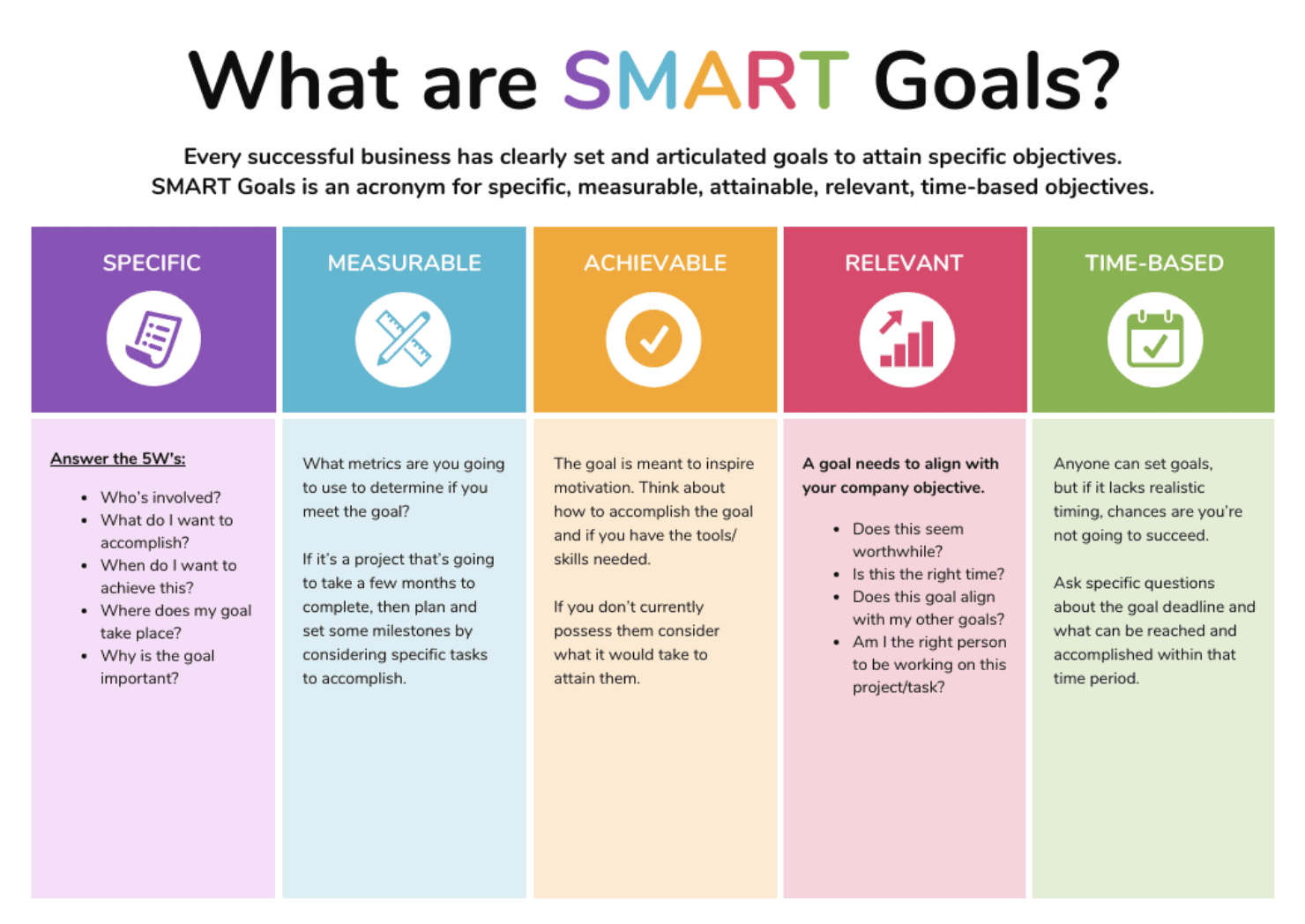
Image via Venngage
The number of AI tools out there is mind-boggling, and it can be overwhelming for even the most tech-savvy person to decide which to use. The best way to start your decision-making is to create clear SMART goals for your content creation. Then you’ll have an easier time sifting through available tools and focusing on the ones that will help you achieve those goals.
SMART means that goals are Specific, Measurable, Achievable, Relevant, and Time-bound.
Here’s an example:
“I want to increase my blog’s traffic by 30% in the next three months.”
You’re giving a Specific figure of a 30% increase in traffic. This metric is easily Measurable and a goal you can realistically Achieve. It’s Relevant to your overall business because more blog traffic means more engagement, and your Time is “in the next three months.”
How many SMART goals should you have? Having one or a small handful is okay, but you don’t want to have too many. A good guideline is to work with 1 to 3 goals for content creation at any given time.
Once you have your goals, you can choose tools to help you achieve them.
Start by considering which admin-related content tasks take up most of your time. This is an excellent place to start, as reducing time spent on these tasks will immediately impact your productivity.
For example, tools like Buffer’s AI Assistant or Otter.ai automate tasks like transcribing video, scheduling content, and organizing files between different applications.
Now that you have goals to guide your decisions, you’re ready to learn what AI can do for your content creation.
Next Steps:
- Create SMART goals for your content creation and identify how AI might help you achieve these goals.
- Choose specific content-related tasks you might entrust to AI.
AI for Content Creation
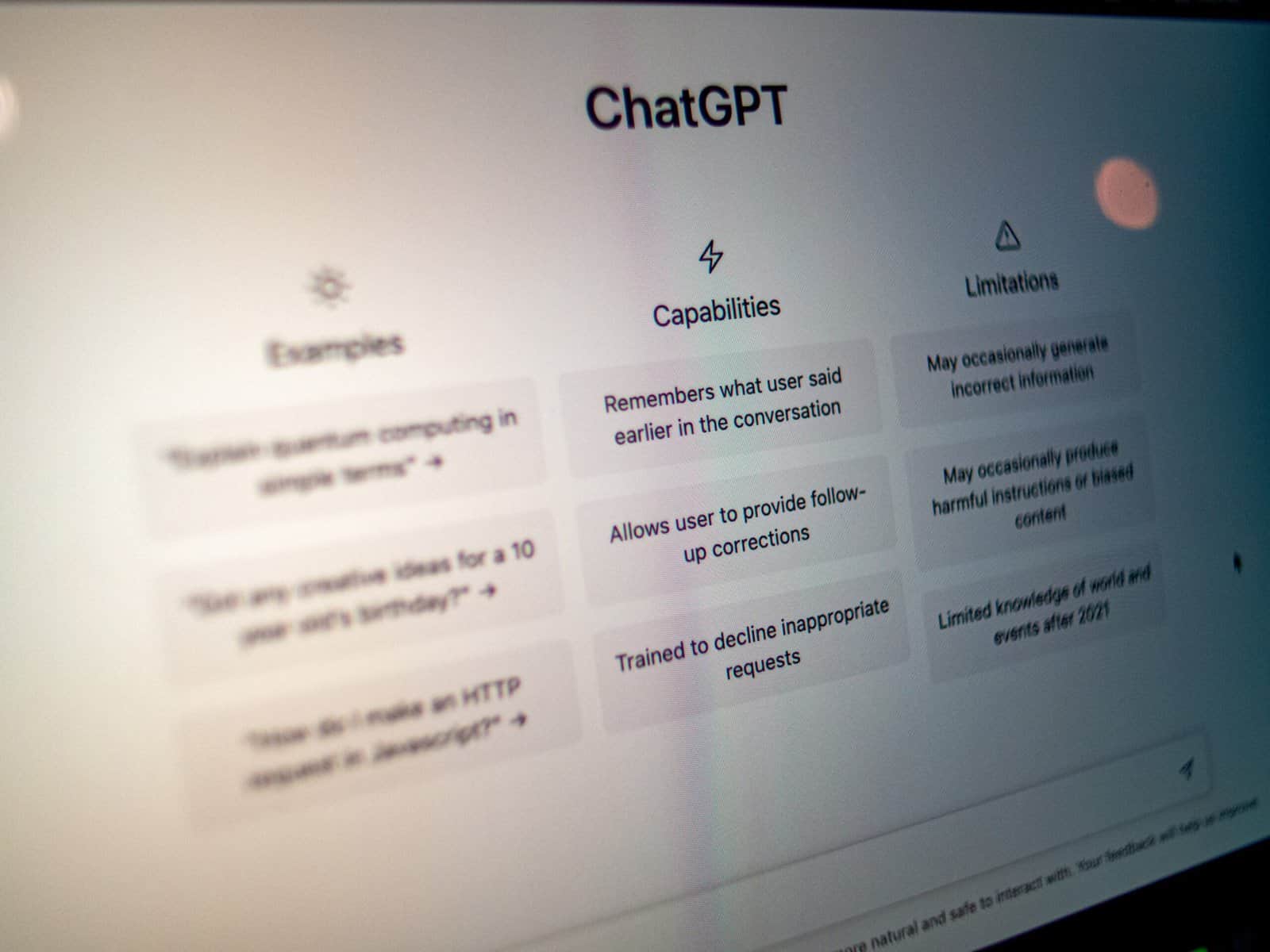
AI uses natural language processing (NLP) and machine learning to study human language and reproduce it. Here are some top areas where people are using it to help with content creation.
Idea Generation
Have you ever been stumped for topics to write about? If you need a great deal of content, developing topic ideas consistently can be a challenge. This is one of the most popular tasks AI can take over for you. There are several simple AI tools for idea generation that are quick to learn.
Good AI tools for idea generation include Jasper.ai and Nichesss, each of which can do a multitude of other things as well.
Topic Idea Generation
Research can take a lot of time when you’re writing content. AI tools like ChatGPT can be used to speed up the process. You can ask the tool a question and get some immediate answers to help you get ideas for what to put in your content.
For example, if you’re writing an informational blog on building an email list, you might want to emphasize the benefits in the introduction. You can ask ChatGPT for a list of benefits for your specific audience, which saves you time starting from scratch with brainstorming. You can even ask it to look up URLs, but be sure to check each one yourself. Or try using Bing’s ChatGPT-powered search to get more information and source material.
Outlining Pieces of Content
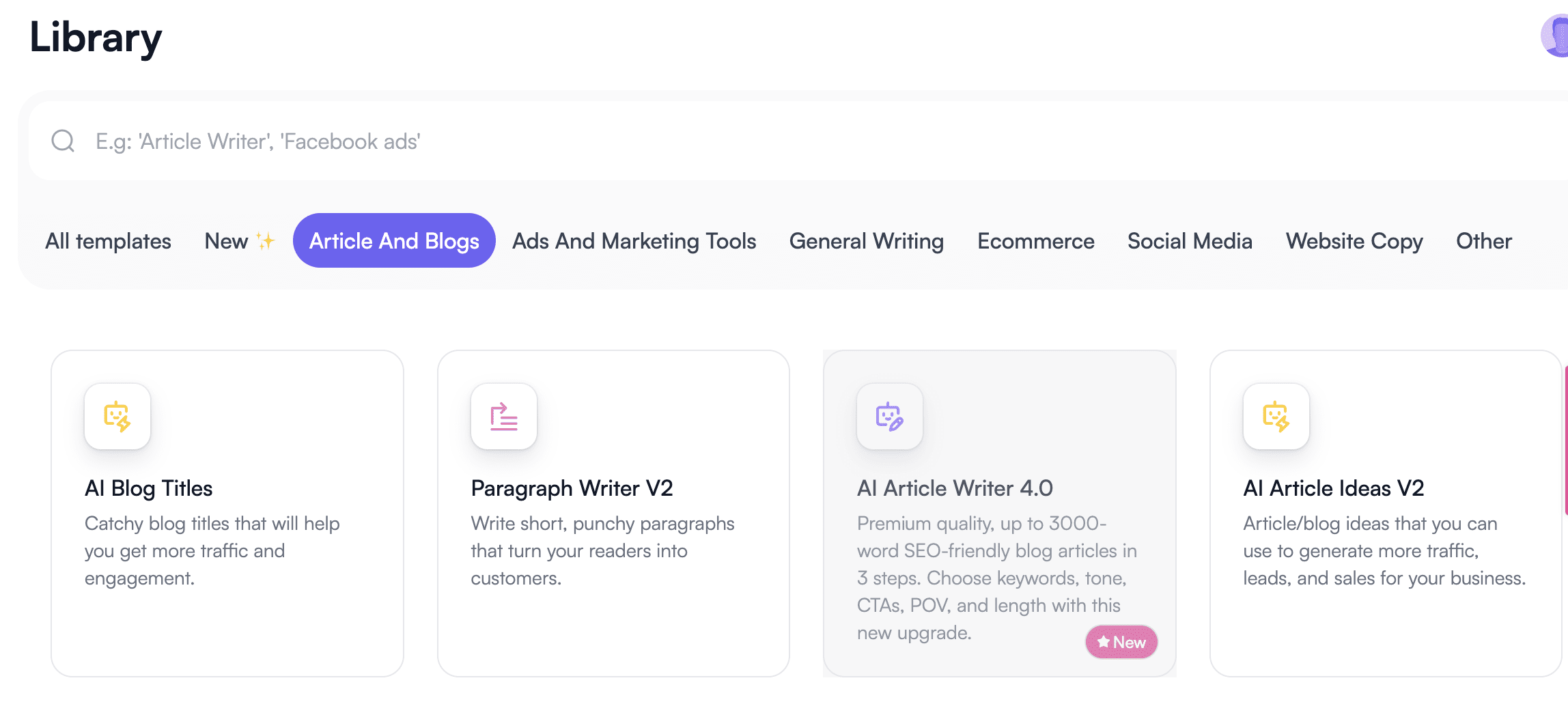
Writesonic does it all! This is seriously just the very tip of the iceburg.
While AI may not be able to write your content the same way you would, it can be useful for creating outlines. Once you have a topic, you can ask an AI tool like Rytr, Frase.io, or Writesonic to create an outline or draft. It can crawl billions of articles in its database to learn how to compose the type of piece you want. Then it will give you a suggested flow you can start from. Be sure to ask it to provide another version or refine your outline with specific elements to include, such as the pain points you know your audience struggles with.
Content Curation
Most content creators use curated content to supplement what they create. This means finding news articles, videos, or other material to share with your audience to engage them and keep them on your website longer.
You can give the AI tools specific instructions to make it understand the content your audience likes. It can then find material to share with your audience automatically. Recommendations and personalization features can be used to show content related to what the audience has read or watched.
Content curation tools that are AI-powered include Curata and Feedly.
Rewriting Content
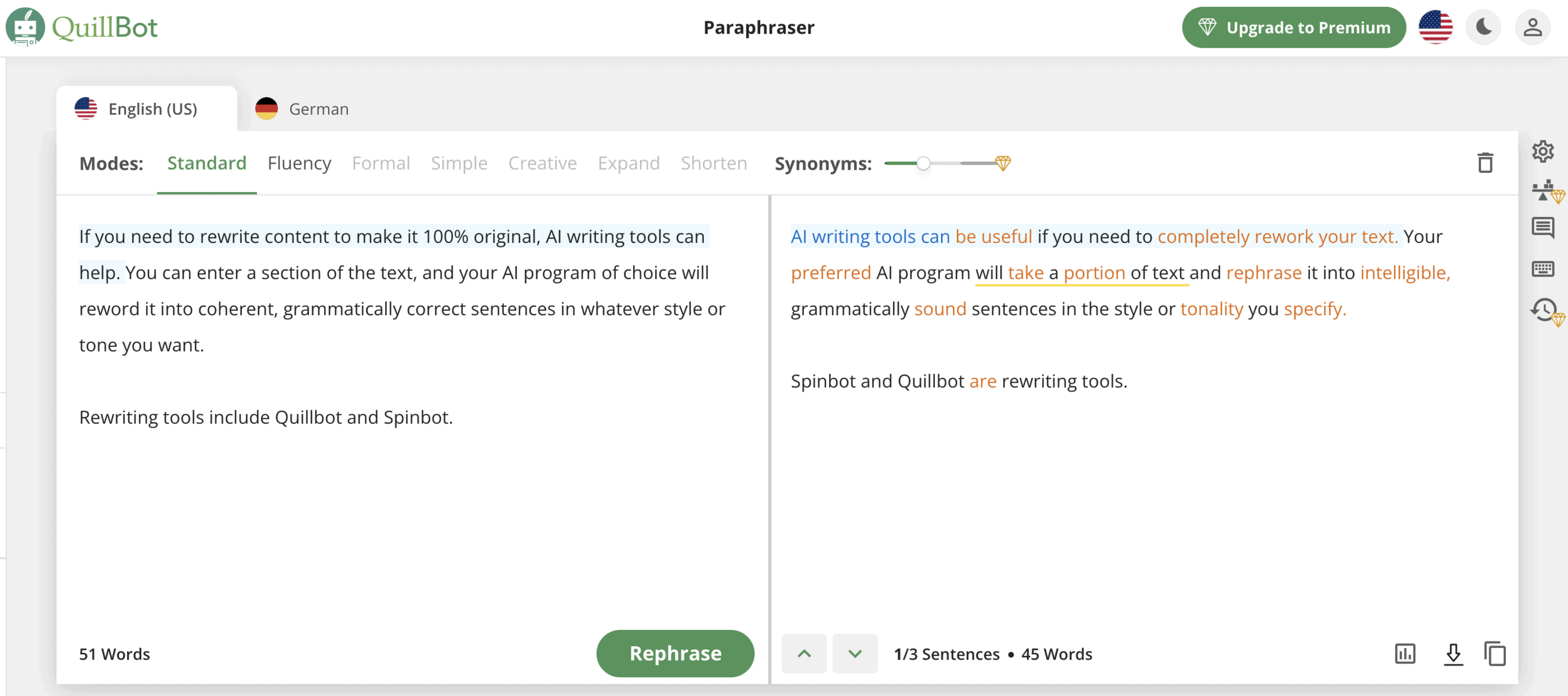
Using Quillbot is as easy as pasting the text you want to rewrite onto their site, and they instantly rewrite it.
If you need to rewrite content to make it 100% original, AI writing tools can help. You can enter a section of the text, and your AI program of choice will reword it into coherent, grammatically correct sentences in whatever style or tone you want.
Rewriting tools include Quillbot and Spinbot.
You can even ask a tool like ChatGPT to rewrite an article for your target audience, adding in more detail as needed. Try asking it to add real-world examples or metaphors!
Checking Grammar
There are many AI tools available for checking grammar and spelling. They can help you identify errors or awkward phrases to save you time and effort. Some editor programs can suggest different ways of phrasing sentences or writing in a certain tone of voice.
Of course, Grammarly is a business tool we use daily. In fact, we’ve been using Grammarly since it was released over a decade ago! Grammarly is the most popular AI program for checking grammar, and it has a paid version that gives you options to specify your preferred writing style.
Grammarly alternatives include ProWritingAid or Gingersoftware.
Video Creation
While it is admittedly not very sophisticated, it only took me about 10 minutes to create this little video using the free tools available in Pictory.
AI tools aren’t just for text-based content. They can help with video production as well. InVideo and Lumen5 use AI to create videos that look professional. You can even use these tools and others, like Renderforest, to create videos from text, images, or audio in different voices and languages.
For video repurposing, you can use at tool like Pictory, which can extract clips to use in your marketing. You can use a tool like Repurpose.io to repurpose your videos for other platforms, such as YouTube and Instagram.
Don’t forget about captions and transcriptions too. Otter.ai is one of the most popular for any transcription. And some platforms, like LinkedIn, will automatically add captions to your videos.
Image Creation and Editing
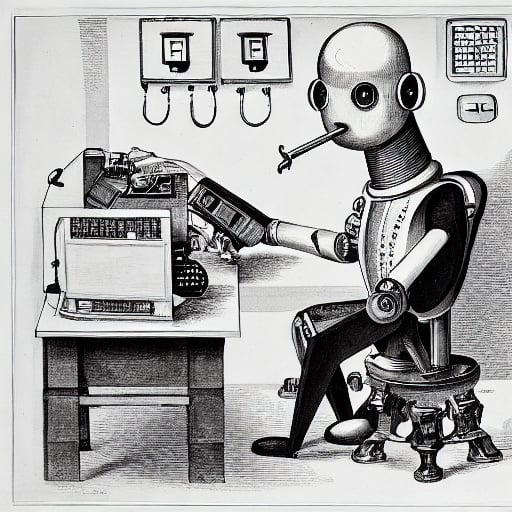
I asked DeepAI to create an image of a robot sitting in front of a computer in an old-fashioned hand-drawn style.
Creating good images individually or at scale can be a huge challenge for any content marketer. However, AI image tools are getting more sophisticated every day.
For example, you can take an existing image and remove its background easily with a tool like Remove.bg or Erase.bg. Then you’ll have a clean image to use for your marketing materials, ads, or websites.
While it can be hit or miss on the output because it’s a technology that is still in its infancy, you can use a tool like DeepAI or Dall-e to generate images from text descriptions. Designs.ai will even create a batch of images based on your input, which is great for getting a variety of choices and options for marketing materials.
Canva Pro: The Best of the
BestAI Marketing Tools?

We’ve really enjoyed playing with the Canva Magic Edit tool! There’s a lot of worry about AI taking over the world but sometimes AI marketing tools can be fun!
Back in the day, Canva was simply a design tool. It was kind of clunky, kind of slow, and always made the fan on my computer go into overdrive. Now, though, Canva, and especially Canva Pro, is becoming an AI marketing tool powerhouse!
Last month Canva had its annual conference and announced all of the latest changes to the platform. I was a bit surprised to see that nearly every update and new addition is AI-based!
For instance, the Canva AI tool will write entire documents, erase the background on images AND videos, and translate your documents. You can also type in a design idea or feeling you want for a flier or social media post and it will generate ideas.
One of our favorite Canva AI tools here at the Studio is Magic Edit, which makes it possible to create fun images like the one above. (Click here for a quick Canva Magic Edit tutorial.)
If the number of AI marketing tools featured in this post is overwhelming, I’d recommend using Canva Pro to get a taste of all you can do with AI. You might find it’s all you need!
Next Steps:
- Identify the areas of content creation that you want AI to help you with.
- Research the latest AI tools for each area that you identified and choose the ones that you will use.
- Which of the potential problems with AI content creation do you think are most important to keep in mind?

Potential Problems with Using AI for Content Creation
AI can streamline your content creation and increase your productivity dramatically, but it can also cause potential problems.
One issue with AI is originality. For example, if you’re using AI to generate ideas, you’ll get some that are generic and very similar to other content out there. The best way to deal with this is by being extremely detailed about what you tell AI to produce.
For example, if you want to write a LinkedIn post and need content ideas, instead of asking “Give me 5 Linkedin post ideas that are related to growing businesses,” ask “Give me 5 Linkedin post ideas that are related to growing early-stage startups with limited funding.”
This way you will obtain more targeted and unique content to publish.
Another issue with AI writing is that it often sounds dull and lacks the spark of human writing. While it may be well-structured and grammatically correct, it doesn’t jump off the page and engage the reader. This is why you should never copy and paste something written by AI directly into your published content. Always add your own voice, stories, and examples.
Content written by AI can be a great guide or outline, but it should never be your final product.
Next Steps:
- Identify the areas of content creation that you want AI to help you with.
- Research the latest AI tools for each area that you identified and choose the ones that you will use.
- Which of the potential problems with AI content creation do you think are most important to keep in mind?
AI Tools to Create Better Emails and Ads
AI marketing tools can help with email and ad campaigns by taking over some portion of the work. Today’s AI tools can handle more complex tasks such as content research, data analysis, and PPC campaign planning. This allows even a small business to run its email and ad campaigns like a corporation. It’s like having your own marketing division.
One AI tool that handles such complex tasks is MarketMuse.
Email Campaign Optimization
Modern AI tools can go beyond simply managing your email list. They can be used for optimizing your campaign and analyzing data to suggest a strategy based on these insights. It could take a marketing team weeks or months to develop this kind of strategy.
AI-powered tools like Phrasee can automate A/B testing of email elements like subject lines, content, and layouts, quickly identifying the best-performing combinations and optimizing campaigns accordingly.
Smart Newsletters
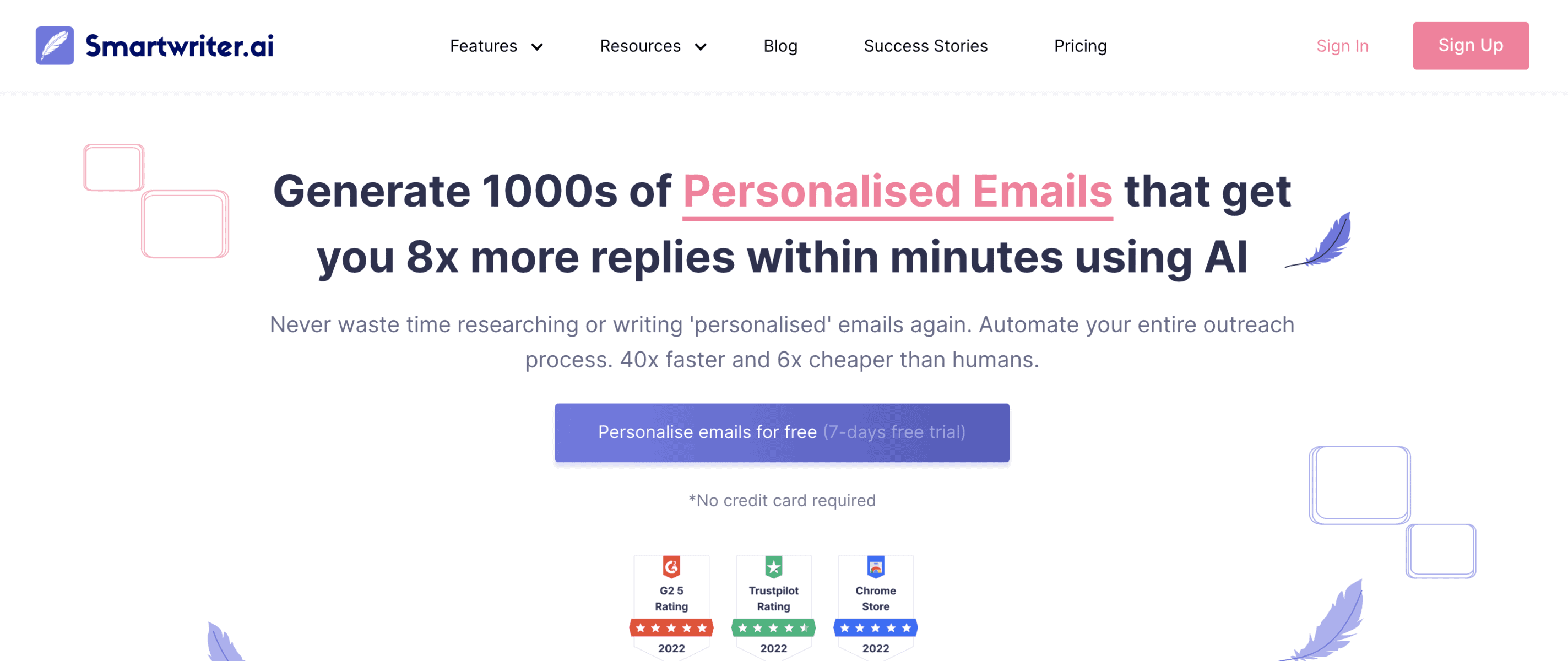
You can use Smartwriter to automate your email outreach.
One area where AI is helping is in creating “smart newsletters.” These are personalized newsletters custom-tailored to each user’s tastes. The AI program uses customer data from each individual to create a newsletter that covers their interests.
One AI tool that generates smart newsletters flawlessly is Rasa.io.
Content Creation for Email Campaigns and Ads
AI can help you create content for email campaigns and ads, just as you learned it can for your regular content in the last section. The goal of this content is to offer the right message to the right people. If you can hyper-target content, it will get you optimal results at a minimal cost.
Email campaigns and ad content creation AI tools have become so advanced that they can identify the type of emotional triggers you must use in your messages to get higher click-through rates.
For example, Persado is a Generative AI platform that leverages a vast, proprietary marketing communications knowledge base, advanced AI, deep learning models, and a decision engine to deliver email copy that motivates your subscribers to engage and act.
Potential Problems with AI for Email Marketing and Ads
There are a few challenges you need to keep in mind if you plan to use AI for your email marketing and advertising.
For instance, the information it gives can sometimes be inaccurate and misleading. This is because AI can only learn through the input you give it. If given low-quality data, it will produce low-quality results.
Privacy is another concern. As General Data Protection Regulations (GDPR) become stricter in the European Union and elsewhere in the world, you need to make sure you comply. GDPR significantly impacts how businesses collect, process, store, and use personal data, including data processed by AI tools.
As a business, you must clearly inform your users how their data is collected, processed, and used, especially when AI is involved. Users must be advised about the existence of any automated decision-making, including profiling, and its consequences.
Next Steps:
- In which areas of your email or ad campaigns would AI be helpful?
- Research the AI tool options available for emails & ads and choose 3-5 tools to test out.
AI Tools for Your Website
AI is already helping businesses fine-tune their websites and offer a great experience for their visitors. Thankfully, many of these tools are affordable for businesses of all sizes!
Analyzing User Behavior

You don’t have to guess which parts of your website are the most popular. Installing a heatmap, like this one from HotJar, shows you where people click and linger!
The primary use case of AI tools right now is to analyze user behavior and provide insights into the user experience. Tools like Hotjar, Mixpanel, and Amplitude can track how users navigate the site, what content they consume, and where bottlenecks cause them to leave. Then, the AI program can give you deep insights and suggestions.
Search Engine Optimization
AI SEO tools like SEMRush, Surfer SEO, and BrightEdge take a great deal of search engine optimization (SEO) over for you. They can analyze keyword trends and suggest ways to improve so you get more web traffic. What makes AI-powered SEO tools better than traditional ones is that they can analyze a large amount of data across multiple websites. This gives you better direction on how to optimize your content best.
AI tools can conduct A/B tests to determine which content or design performs better for each user segment. A/B testing, or split testing, is a technique used to compare two versions of a webpage or marketing campaign and determine which works better to optimize. A/B testing can be used for headlines, sales copy, calls-to-action, design elements, and landing page navigation.
Other SEO tasks AI can do include suggesting titles and content, analyzing link structure and delivering insights, improving site structure, and performing competitor analysis.
Website Personalization
One of the main areas where AI is improving customer experience is through personalization.
Tools like Bloomreach use AI algorithms to analyze user behavior and recommend products that are likely to interest them. For example, Amazon uses AI-powered product recommendations to suggest items to users based on their purchase history and browsing behavior.
AI can also display different content to users based on their interests and behavior. For example, a news website can use AI to display articles about the user’s interests or location.
Tools like Optimizely will even help you create landing pages that are personalized to the user’s interests and behavior. For example, a travel website can display personalized travel recommendations based on the user’s past bookings and search history.
Chatbots
As a small business owner, you’re always looking for ways to improve customer experience and increase efficiency. One tool that’s gaining popularity for achieving both of these goals is the chatbot. Chatbots are automated messaging programs that can interact with your website visitors, answer their questions, and even make transactions. One of the best reasons to install a chatbot on your website? It’s available 24/7!
But before you jump on the chatbot bandwagon, you should consider a few things.
First, think about your business goals. What do you want the chatbot to achieve? Do you want it to provide customer support, generate leads, or make sales? Knowing your objectives will help you choose the right type of chatbot and tailor its responses to meet your needs.
Next, consider your target audience. What questions are they likely to ask? What tone and language will resonate with them? Your chatbot’s responses should be designed to engage your customers and make them feel heard and understood.
Another important factor to consider is the level of customization and personalization you want your chatbot to have. You can choose a pre-built chatbot that offers basic functionality or invest in a custom chatbot tailored to your business needs and branding. The latter option will likely require more time and resources, but it can also provide your customers a more seamless and personalized experience.
Lastly, don’t forget about maintenance and updates. Chatbots need regular testing and tweaking to ensure they’re functioning properly and providing accurate information. You’ll also want to stay up-to-date on the latest chatbot trends and technologies to ensure your bot stays relevant and effective.
A few of the more well-known chatbot programs include Intercom, Drift, and Tidio.
Next Steps:
- Decide on a few key ways AI marketing tools can help improve your website.
- Research available AI tool options and choose a few to try out.
How to Implement AI the Right Way

Step 1: Understand AI Technologies for Content Creation
When it comes to content creation, remember that AI uses natural language processing (NLP) and natural language generation (NLG).
NLP helps computers understand, interpret, and respond to human language by breaking down text and analyzing its structure. This enables tasks like keyword extraction, translation, and sentiment analysis.
On the other hand, NLG allows AI to generate human-like text from data or predefined templates. This can be used for creating articles, summaries, or social media posts.
Both NLP and NLG work together to automate content creation, saving time and effort while enhancing the overall quality and efficiency of the process.
Step 2: Design your AI Content Strategy
Designing your AI Content Strategy involves developing a comprehensive plan for using AI technologies to meet your content creation objectives.
Start by identifying your content goals, like you learned about in the SMART goals section above, along with your target audience. Establish clear content goals (e.g., increasing engagement, brand awareness, or conversions) and define your target audience’s preferences, demographics, and behaviors. This helps tailor your AI-driven content for maximum impact.
Next, determine the appropriate AI marketing tools and solutions. Research and select AI tools and platforms that align with your content goals and target audience. Consider solutions that offer NLP, NLG, text summarization, and sentiment analysis features to streamline content creation and optimization.
Your goal should be incorporating AI tools into your current content processes, such as content planning, drafting, editing, and publishing. If you have a team, train them to use these tools effectively and establish protocols to ensure seamless collaboration between human creators and AI technologies.
Finally, monitor key performance indicators (KPIs) like engagement, reach, and conversion rates to assess the impact of your AI-driven content. Regularly review and refine your AI content strategy based on data-driven insights to ensure continuous improvement and long-term success.
Step 3: Recognize the Essential Rules and Regulations When Uing AI for Content Creation
#1. Ensure Data Privacy and Security
When using AI for content creation, safeguard personal and sensitive information to comply with data privacy laws, like GDPR and California Consumer Privacy Act (CCPA). Implement robust security measures to protect data from unauthorized access and use anonymized or synthetic datasets when you want an AI to refer to some data.
#2. Address Bias and Fairness in AI-generated Content
The opinion of an AI depends on the data you give it. So if the data is biased, so would be the AI’s opinion. You must be able to identify and mitigate such biases in AI-generated content to ensure fairness and inclusivity. To do so, regularly review your AI models and apply fairness-focused techniques to minimize biased outcomes.
#3. Comply with Copyright and Intellectual Property Laws
If it replicates or imitates protected works, AI-generated content may infringe upon copyrights, trademarks, or patents. Understand applicable intellectual property laws, obtain necessary permissions, and ensure your AI-generated content is original and doesn’t violate any rights.
As mentioned above, the best way to ensure against violating copyright law is to be cognizant of only using AI content as a guide or outline. Don’t ask the AI to churn out myriad articles for you and put them on your website without editing.
Step 4: Enhance Creativity and Collaboration with AI
Leverage AI to Enhance Your Creativity
AI can assist content creators in generating ideas, overcoming writer’s block, and exploring new perspectives. Use AI-generated suggestions, like titles, topics, or outlines, to inspire and enhance human creativity without replacing the human touch.
Collaborate with AI-Powered Tools for Content Creation
AI-powered tools can streamline collaboration among team members by automating repetitive tasks, providing real-time feedback, and suggesting improvements. Use AI to centralize content management, track progress, and facilitate communication, ensuring a smooth and efficient workflow.
Combine Your Expertise with AI-Generated Insights
Harness the strengths of both human expertise and AI insights to create high-quality content. While AI can analyze data and generate ideas quickly, humans excel at understanding context, nuance, and emotional appeal. Most importantly? YOU understand what works for your clients and customers. Strike a balance between AI and your expertise to optimize content quality and effectiveness.
Step 5: Use AI for Content Optimization and Repurposing
AI tools can enhance your SEO efforts by identifying keyword opportunities, optimizing meta tags, and suggesting content improvements. Utilize AI-powered SEO platforms to stay updated with search engine algorithms and improve your content’s organic visibility.
AI can also help identify the most effective channels and formats for content distribution, as well as optimize ad targeting and social media campaigns. Leverage AI to maximize the reach of your content, ensuring it gets in front of the right audience at the right time.
The most important thing to remember is that AI can help by streamlining work, but you can’t rely on it 100%. Your goal should be to make your job easier, more productive, and of higher quality overall.
Where do you stand on the topic of AI for content and marketing creation?
2023 seems to be the year of AI and while it feels very new right now, many of the tools outlined in this post have been around for years. As with anything, the longer they’re in existence and the more they’re tweaked and used, the better the technology will get. Soon, I suspect, all small business owners will come to rely on AI marketing tools in some shape or form.
So today, close to the beginning of the AI revolution, where do you stand? Will you be adding AI to your processes immediately or waiting it out to see what comes next?
AI Marketing Tools List
Test out some of the inclusions on this AI marketing tools list to see if they can help you run your small business more efficiently!